Mobility x Safety NYU Shuttle Waiting Area

This is an experience prototype enhancing the waiting experience for students through the intersection of safety and mobility in public waiting areas.

Duration: 4 months (Group Project)

Strategies: Participation Observation, Experience Prototype

See Final Prototype
Context

As a team, we collectively chose to address a shared concern that affects us all. This concern revolves around the various safety issues we encounter, including instances of sexual harassment, unsolicited approaches by strangers, being followed, and other ongoing situations. We thought this would be a flexible but also too general opportunity space for us to intervene different approaches and mediums. Through limiting down our opportunities area, we gravitate toward exploring public waiting areas specifically students waiting for the NYU Shuttle due to access to resources and first-perspective as NYU students.

Due to the time constraint of only a semester, everything was rapid fast prototype.

Process Breakdown

Opportunity Space

How can we effectively engage with the concept of safety in order to optimize the waiting and commuting experience in NYC for people to feel more at ease and comfort?

Participant Observation

During the initial stage of the design thinking process, our team engaged in a participatory observation study conducted in diverse fieldwork sites that we were familiar with. We take detailed notes to document the surroundings, people, and specific areas where individuals gather. Through these observations, we recognize subtle nuances, identify patterns, and draw connections between the different locations.

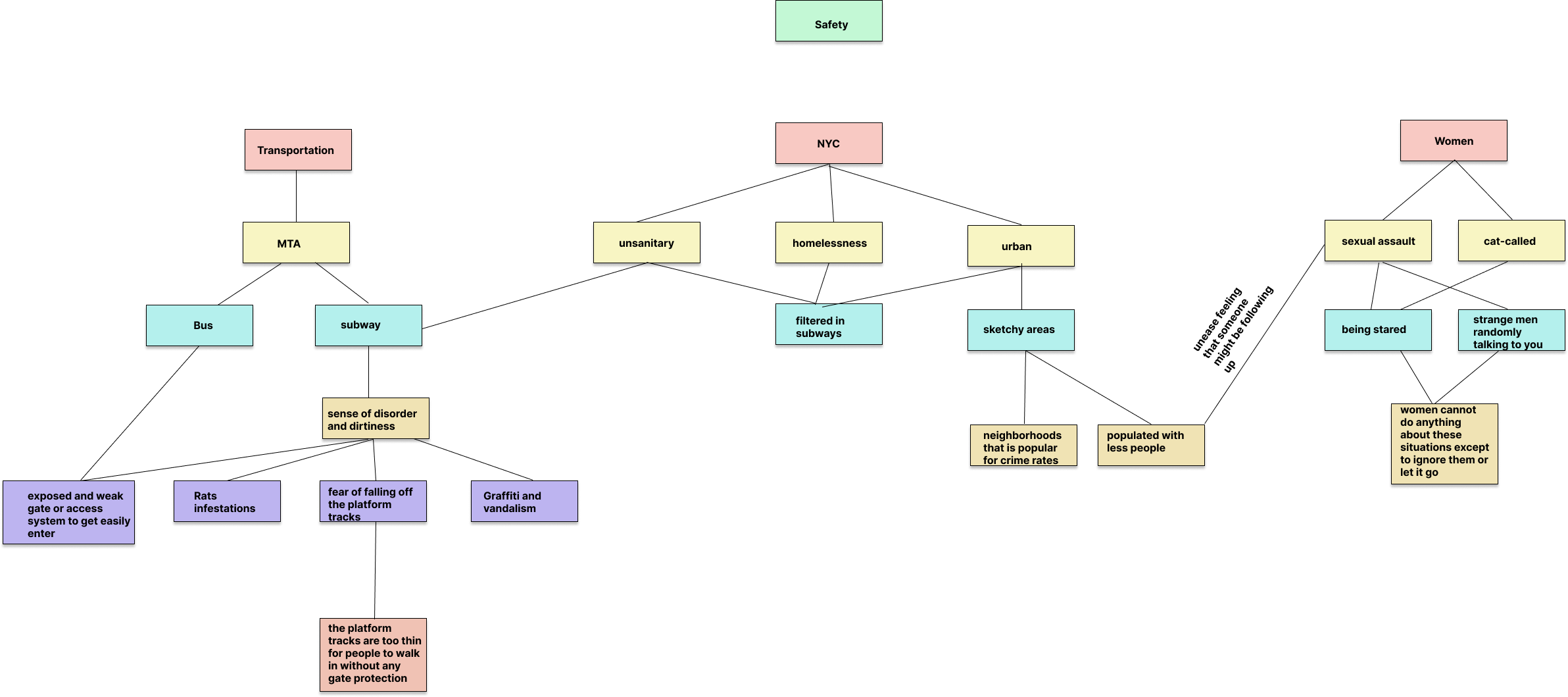
UMD Techniques: Card Sorting

During the second stage, I used card sorting to enable me to explore more diverse perspective and identify relevant connections on the general topic of safety. By leveraging this technique, I was able to dissect and analyze the elements that contributes to my personal experiences of safety concerns.

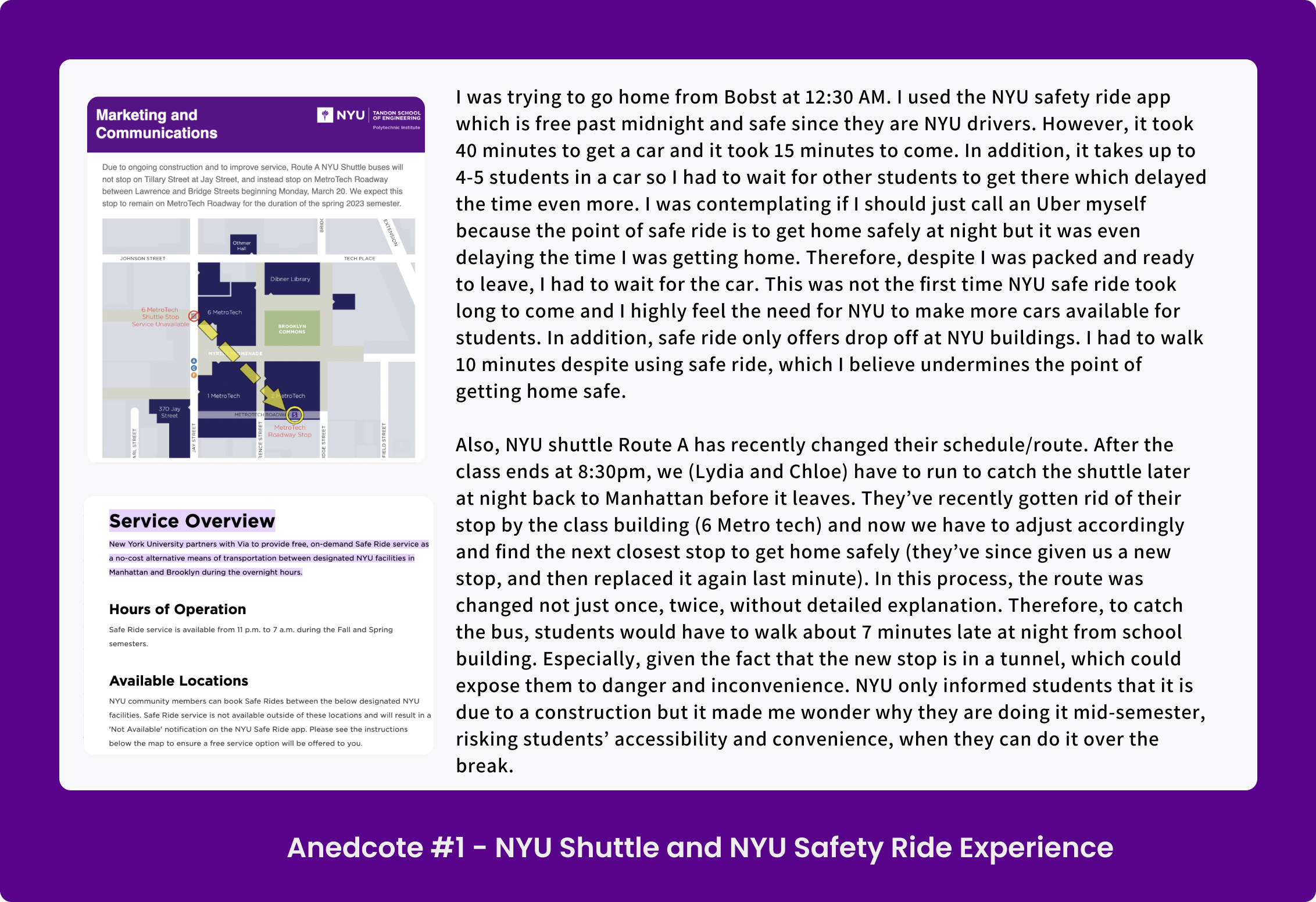
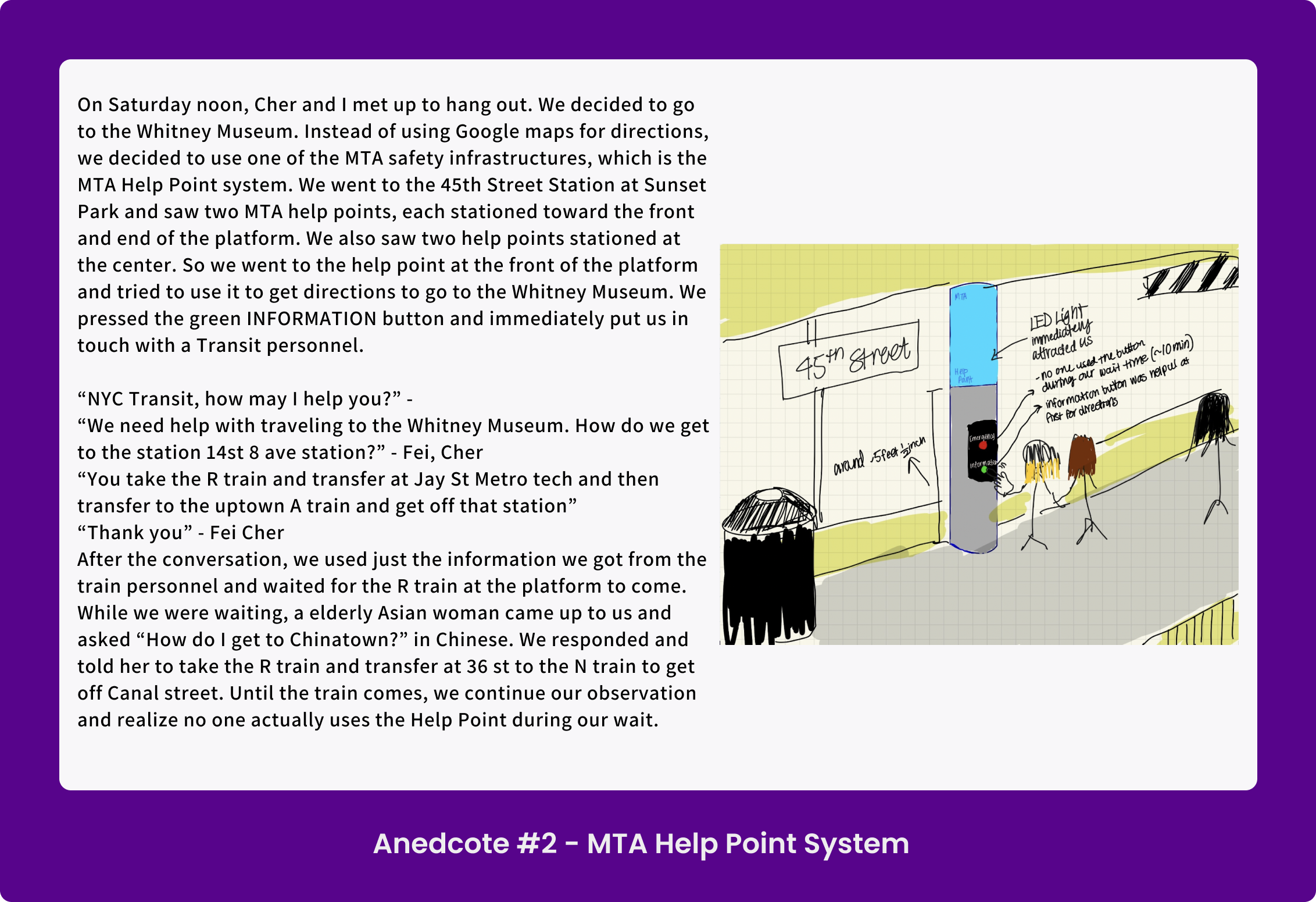
Ancedotes

The next steps, we document our experience as we navgiate through the public areas utitizing the safety instructure

These anecdotes share commonalities at the intersection of mobility navigation and safety. One common theme is the challenges faced in accessing safe transportation. Delays, changes in routes, and limited availability of vehicles hinder individuals' ability to find reliable and timely transportation options. Communication gaps are also evident, as inadequate explanations for changes and underutilization of safety infrastructure create confusion and inconvenience. Furthermore, there is a shared desire for transportation options that are not only safe but also accessible and convenient, taking into account individual needs and ensuring a smooth journey.

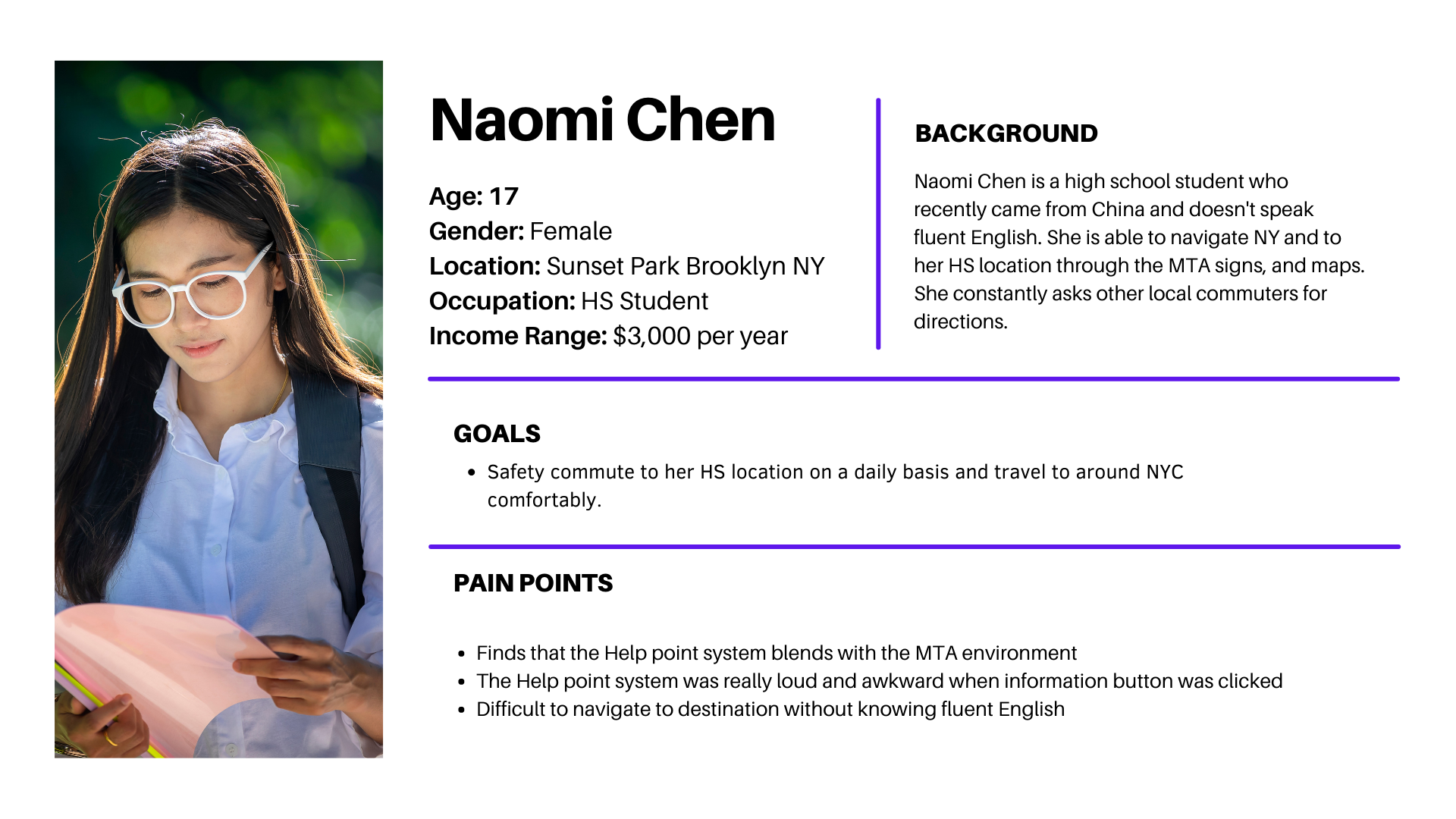
User Personas & Journey Maps

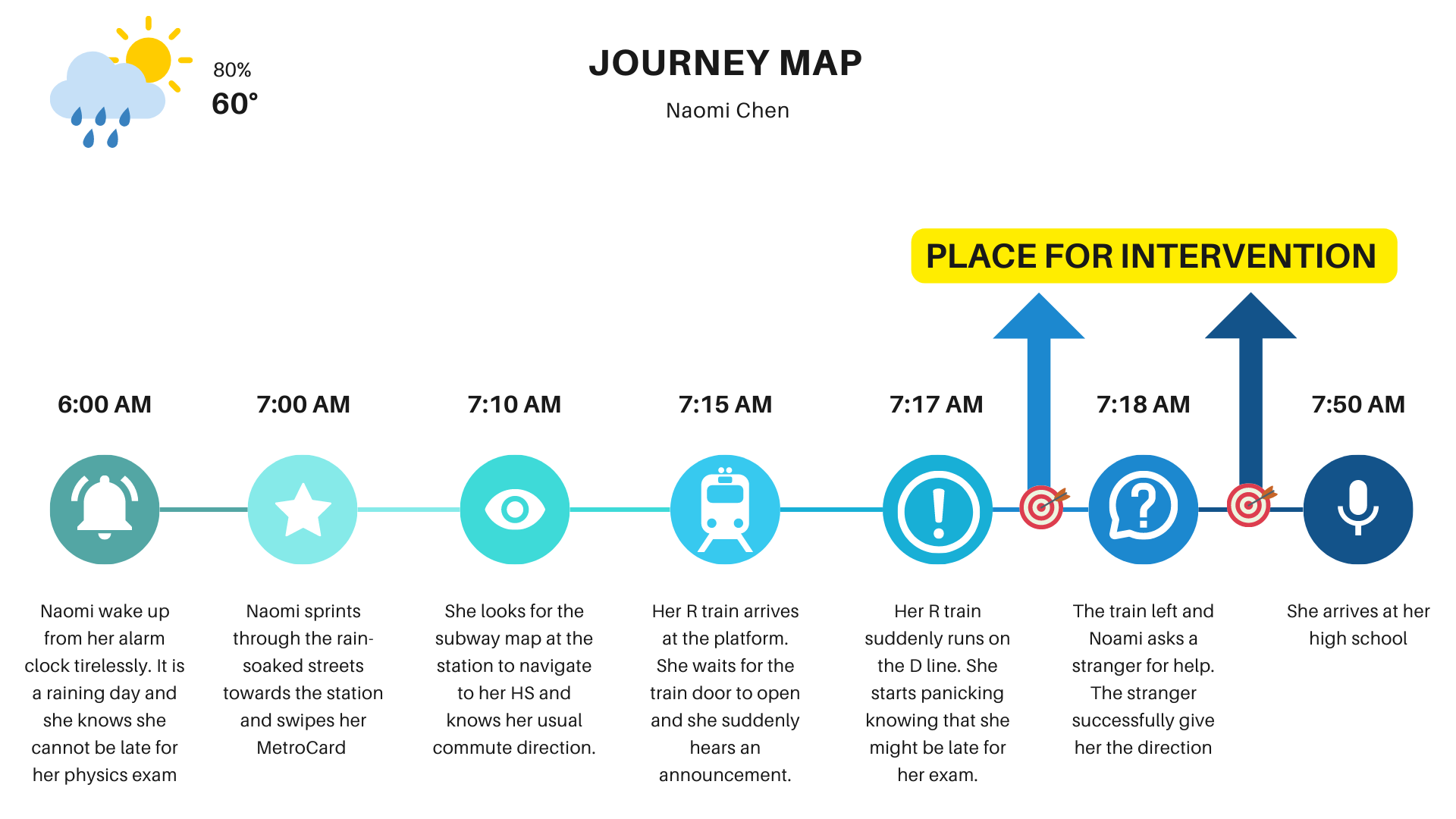
Based on the anecdotes and the research insights, we create user personas demonstrating our target users, especially their goals and pain points in the intersection of challenges such as accessing safe transportation, communication gaps and the the provision of accessible and convenient transportation options.

Intervention Opportunity

1. Improve the MTA help point system to become more easily noticeable, approachable, reliable, and discreet, with visible language accessibility buttons

2. Offer proactive route change notifications to commuters before they leave their homes, along with affordable alternative transportation options for a safe and efficient journey to their destinations.

Prototype Phrase 1

Based on all the research process and personal experiences, we identified the wait prior to taking safety infrastructure as a meaningful intervention point to enhance safety for students in public.

process timeSign1 timeSign2

Feedbacks & Insights

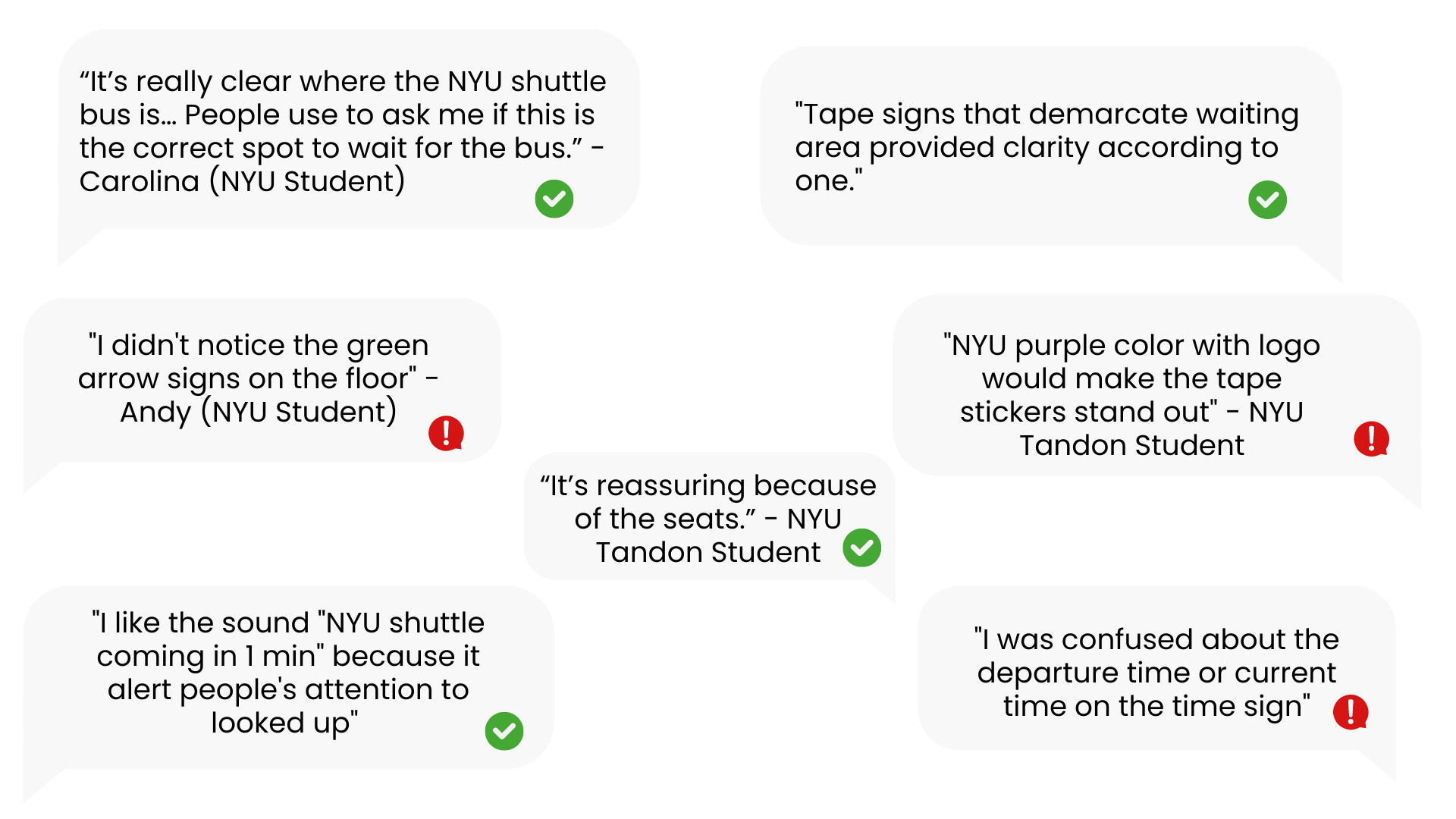
During our prototype, we conduct some interviews with students regarding about their experience with our elements. Here are direct quotes of what the students had to say.

interview

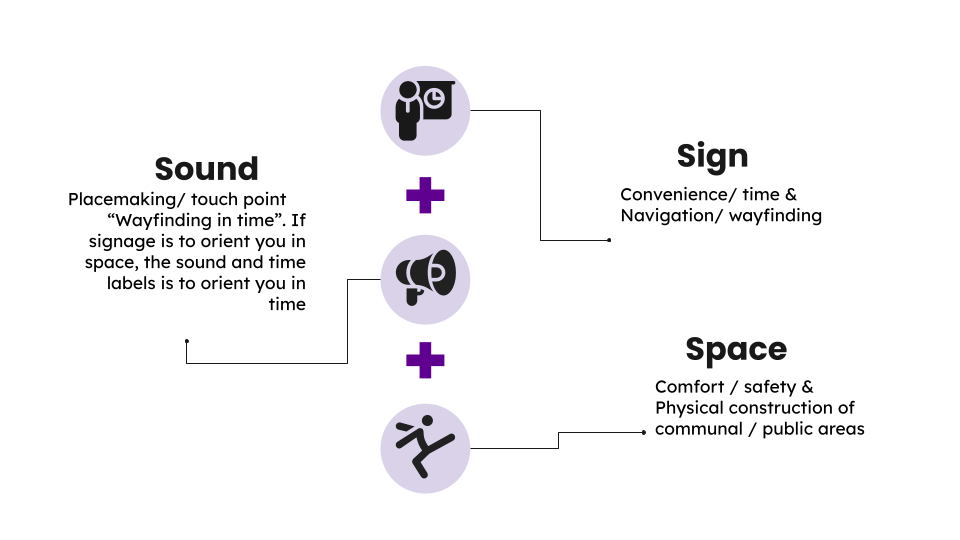
Through these interview answers, we realized a lot of iterations we can make to our next phrase of prototype in terms the sound, space, and signs.

01

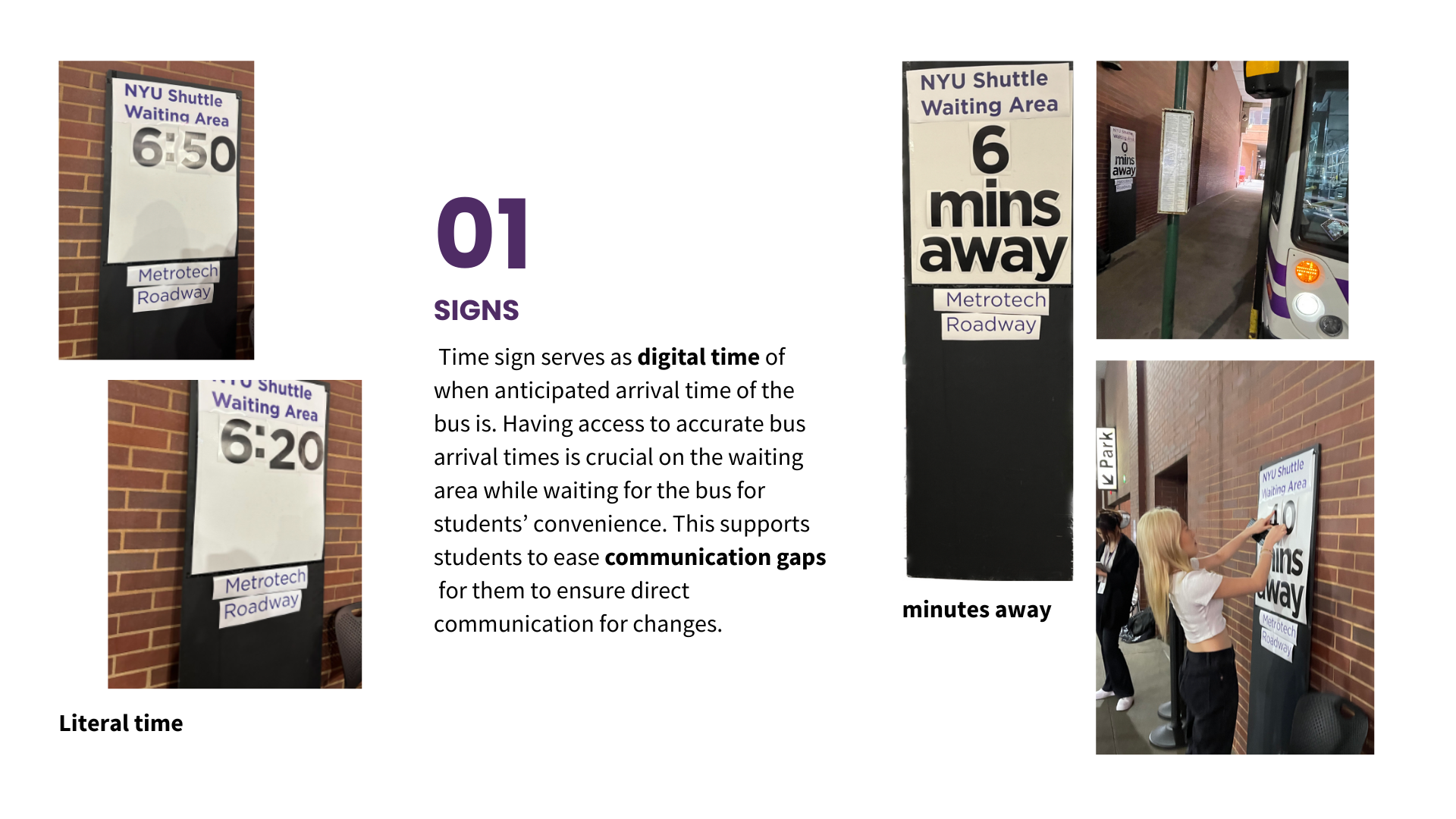
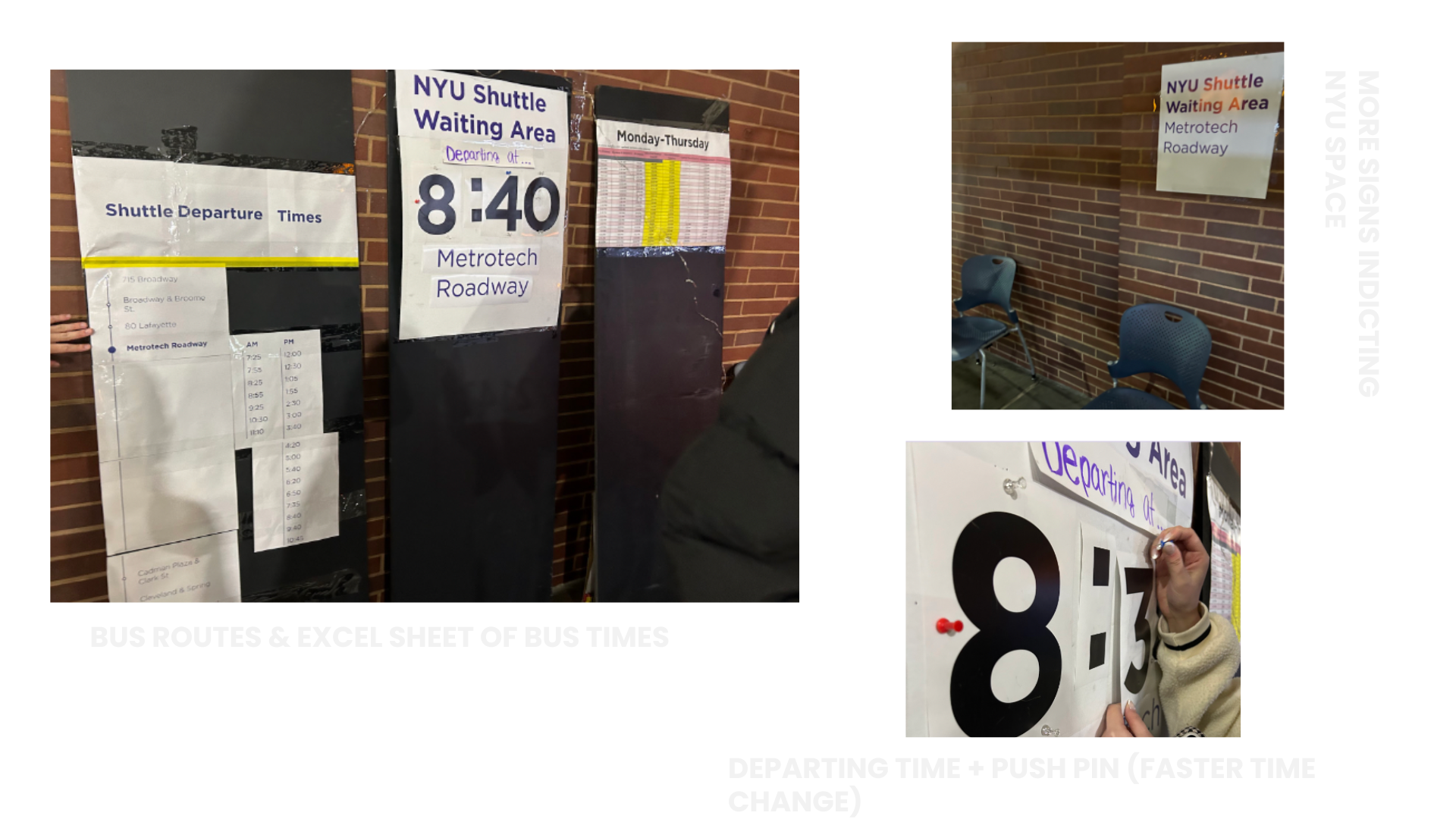
For a faster and easier prototype, we use limit the time sign to use only "literal time" because it was easier for us to switch out the number. We also iterate the literal time sign because the time does not provide enough information of is it departure time or arriving time.

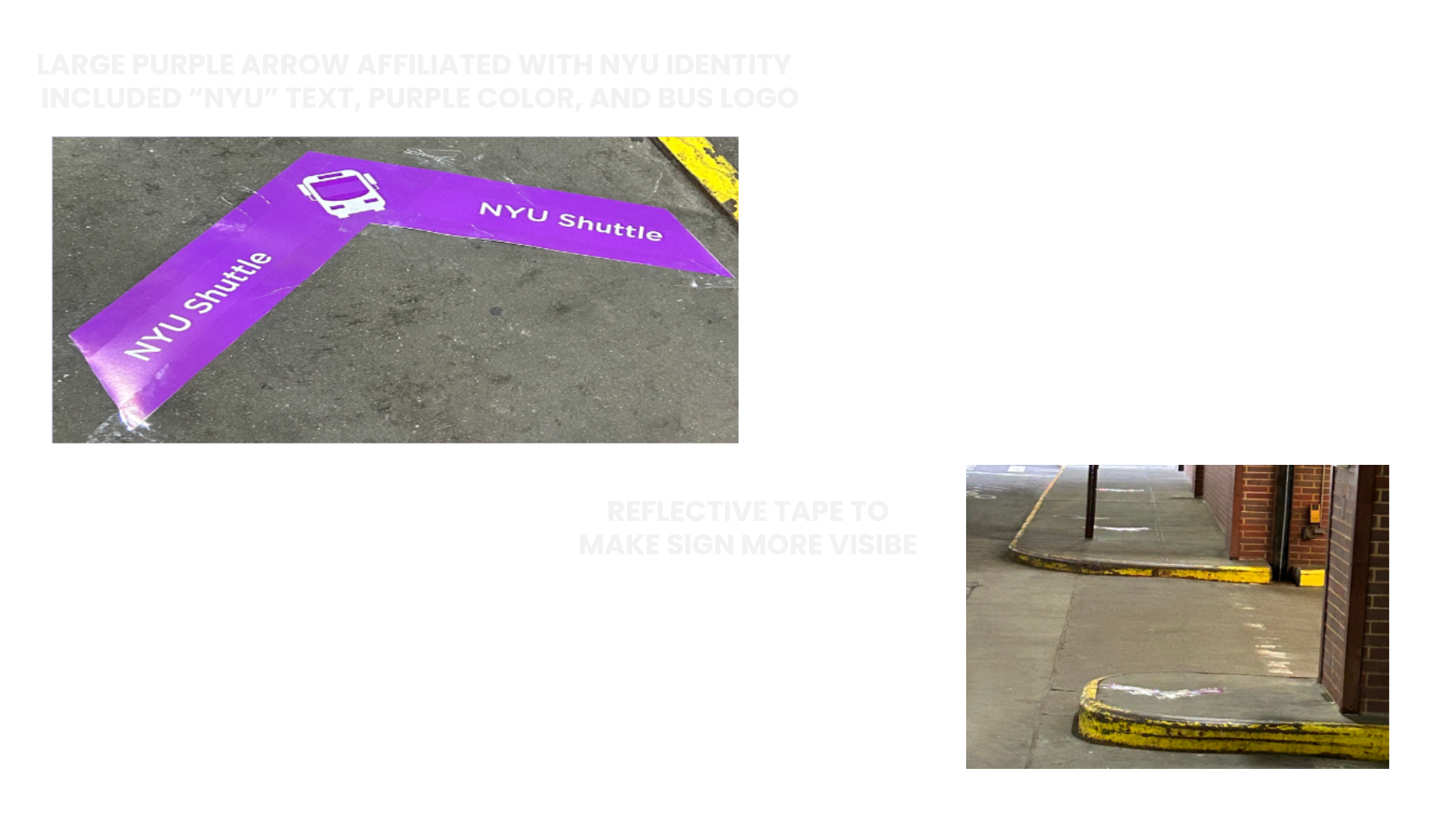
For floor signs, we design NYU brand identity signs asscoaited with purple color, NYU typeface, and the bus logo.

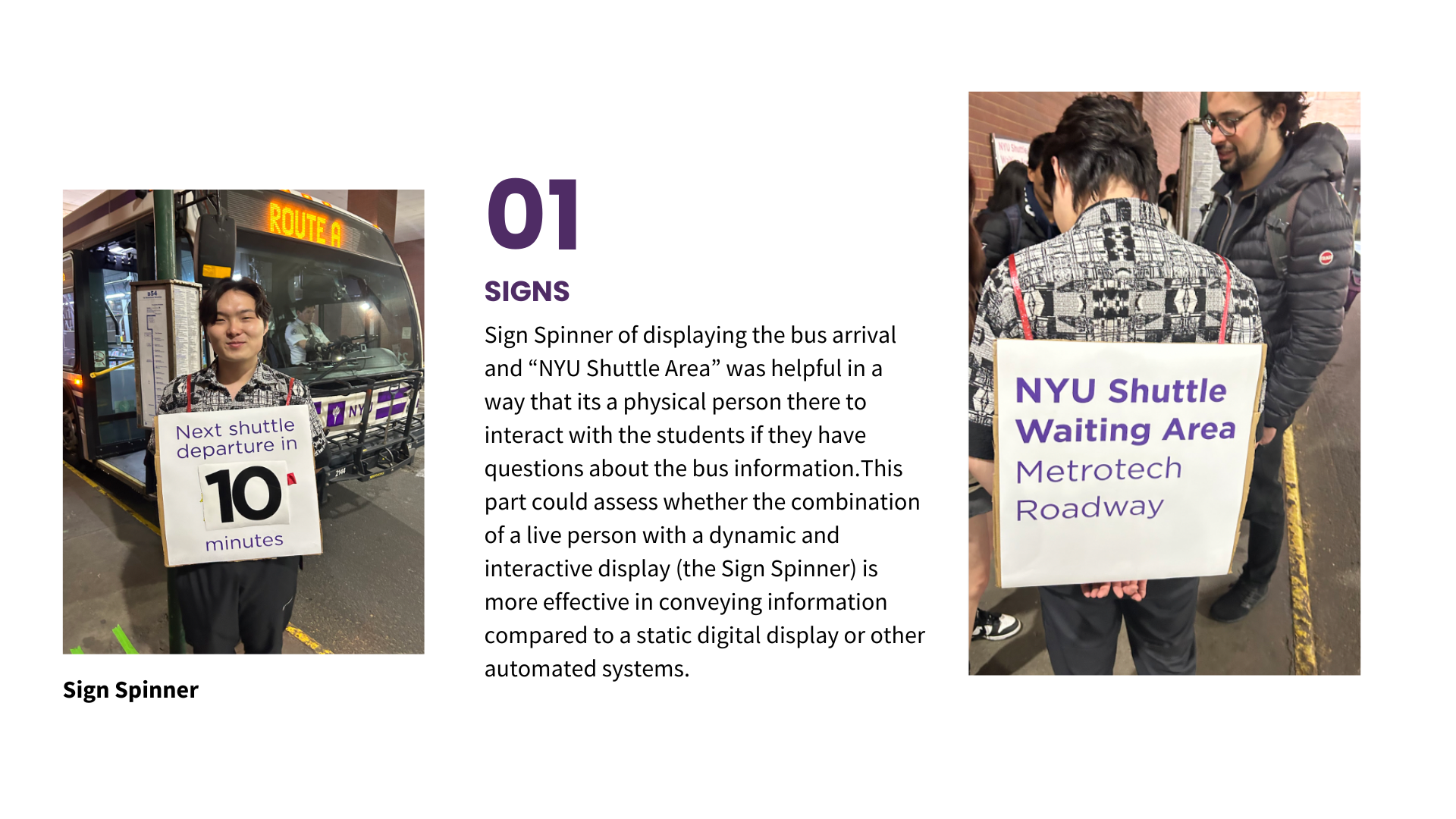
Sign spinner was not effectivie because it requires physical demands and exposed to the weather conditions that makes the person wearing it uncomfortable.

02

We tested out more options of different voices / text of the Tiktok text-to-speech feature from Tik-tok but the original one was still the most neutral one

03

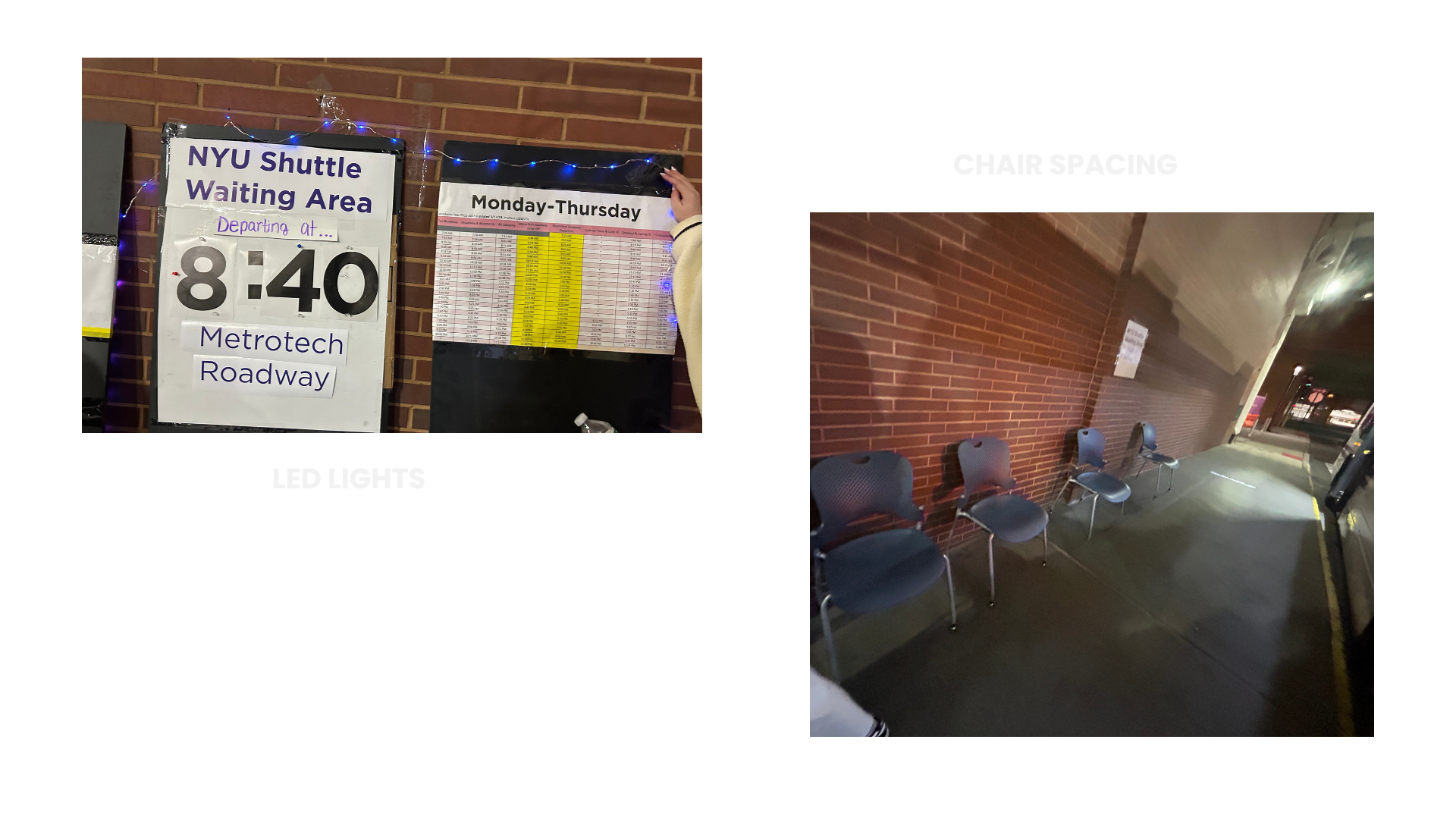
We added another element: purple LED lights to lighten our poster signs. The led lights was not visibe enough because the lights are not bright and strong enough to lighten the darkness of the tunnel.

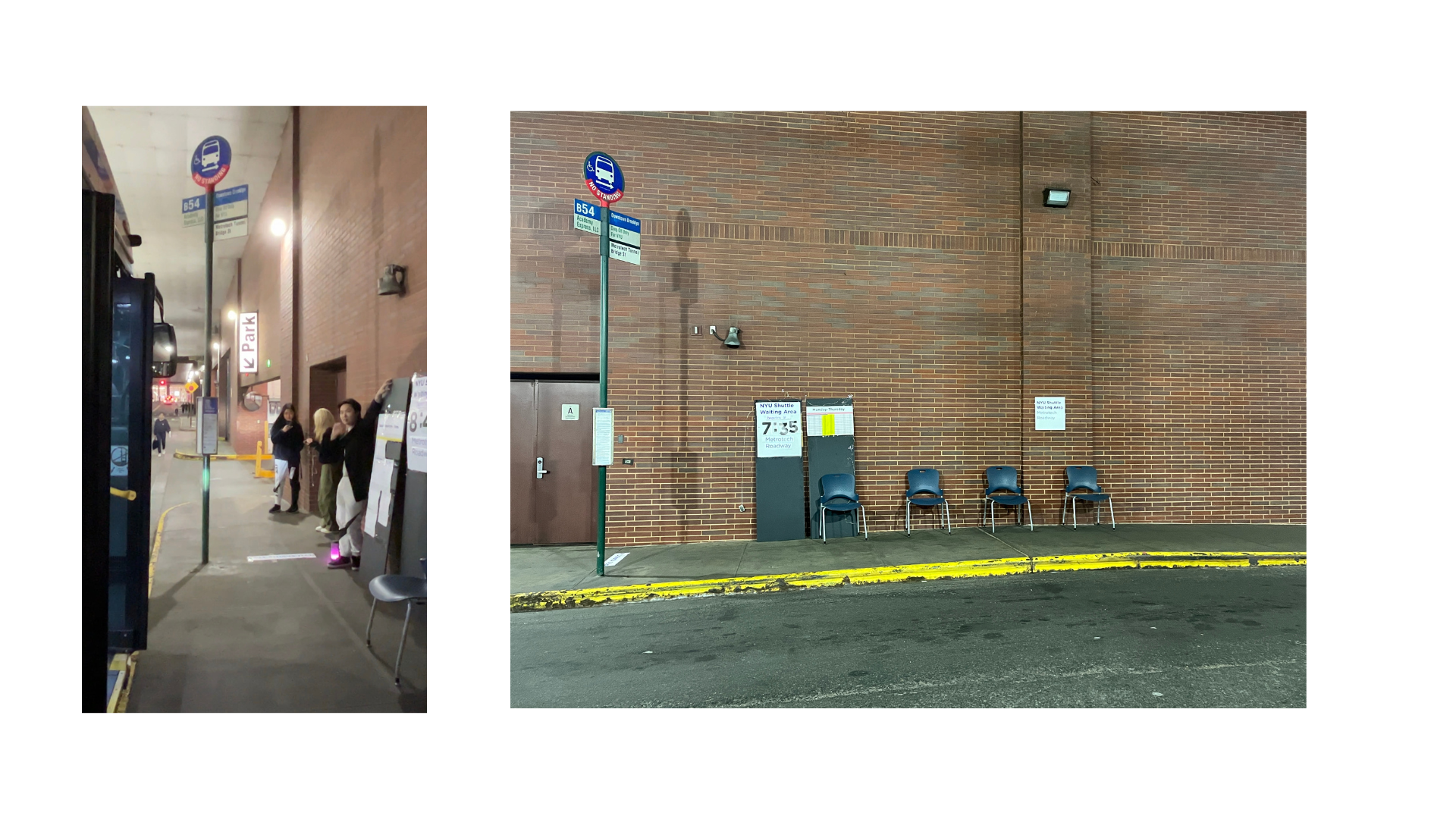
To play with the spacing even more, we spaced out the chairs.

twoPhrases

Prototype Phrase 2

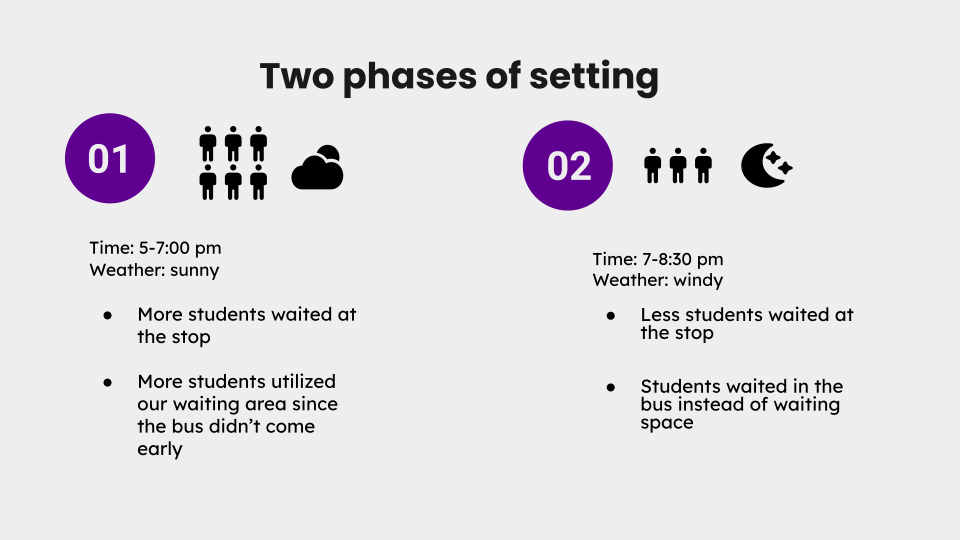
Based on the first prototype observation and feedback, we iterate and add the elements of sound, signs, and space. Due to the factor such as time of day and the bus arriving early, there was not much students in the utilizing our waiting area. The student just waited in the bus instead

twoPhrases

Next Steps

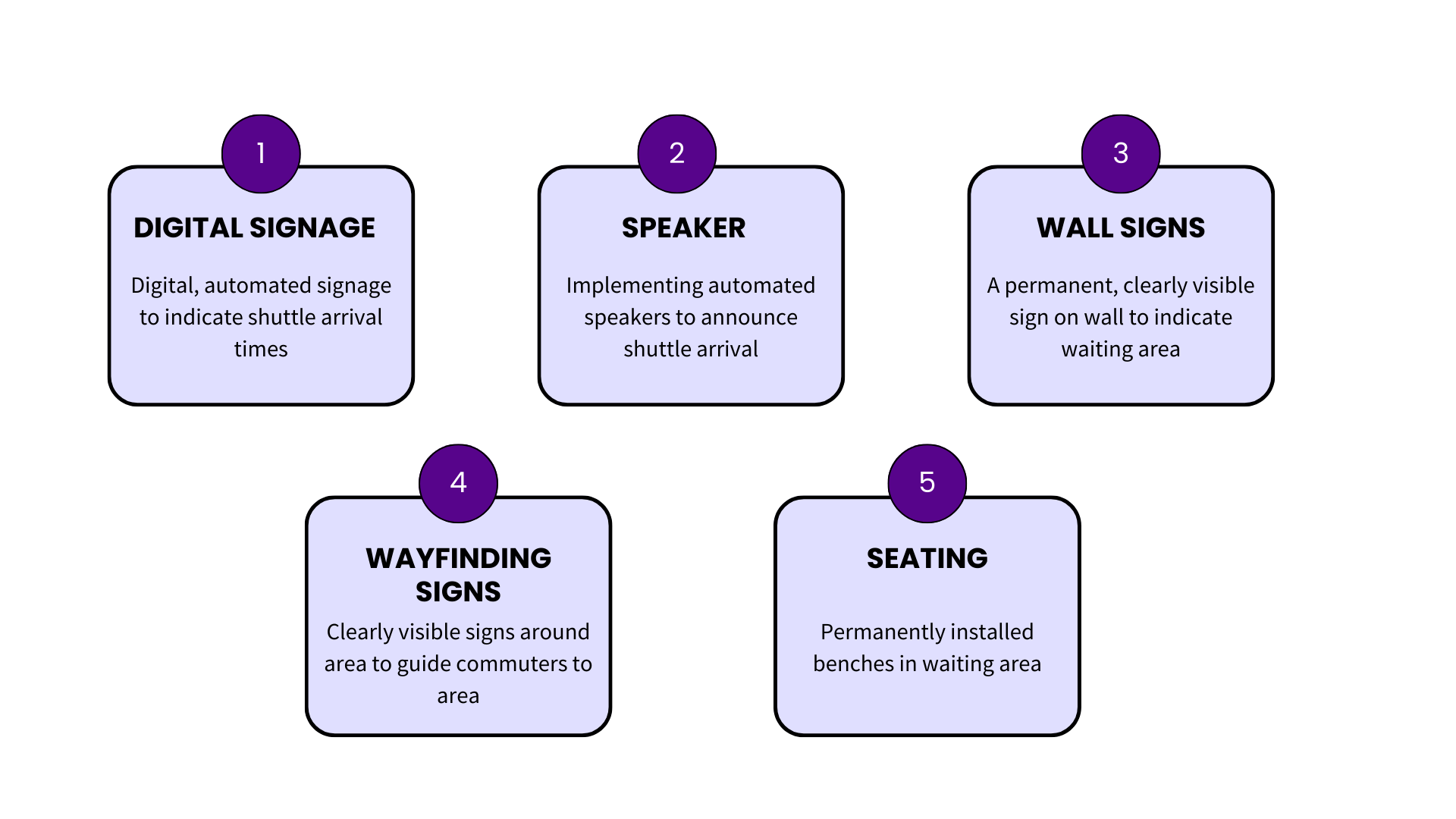
Since all this was a drafted- fast prototype, here some of the elements we can upgrade into a high fidelity intervention

twoPhrases

What can you do?

Questions to consider

1. How can NYU improve the spaces around their transit systems?
2. How can NYU improve their communication?
3. How can this be adapted into other public safety endeavours?

Further Actions

1. Write to NYU
2. Speak with your local representatives
3. Support communities pushing for public safety

Reflection

This was my first project that led me to learn about what is design thinking. In this process, we made a tangible creation of our waiting space concept through experience prototyping. Although at first, our project was only thought to solve our safety issue in terms of being comfortable and secured in public spaces, however it was not fixed. Through this prototype, we learn to understand and explore the variety of methods and mediums in which we can intervene and introduce new ways that other public waiting areas can adapt to be more convenient and safe. In general, when people feel more comfortable/knowledgeable/mobile about/in the spaces throughout their commute, they feel more secure with the choices they make, the communities they are a part of, the people they are around, and most importantly, the way they navigate to and from the places they need to be at certain times.